E-liquids can feel more or less "thick". This property is called viscosity and describes how easily or difficultly a liquid flows. Differences in viscosity affect, among other things, how the liquid is transported through the wick in an e-cigarette and how well it works in different types of pods and tanks.
What Is Viscosity?
Viscosity is a measure of how sluggish a liquid is. A thin liquid (with low viscosity) flows easily, while a thick liquid (with high viscosity) flows more slowly. In the case of e-liquid, viscosity is primarily determined by the ratio between propylene glycol (PG) and vegetable glycerin (VG).
PG and VG – The Basis for the Differences
Most e-liquids are based on a combination of PG and VG. These two ingredients have different properties and thicknesses:
- Propylene glycol (PG) is a thinner liquid with low viscosity. E-liquids with a higher PG content flow more easily and are absorbed faster by the cotton in the coil.
- Vegetable glycerin (VG) is considerably thicker. E-liquids with a higher VG content become more viscous and move more slowly through the wick.
E-liquids with a high VG content (for example, many high-VG shortfills) are therefore thicker, while e-liquids with an even ratio, such as 50VG/50PG, often fall somewhere in between.
Why 50VG/50PG Is Often Perceived as “Just Right” in Thickness
E-liquids with a 50VG/50PG ratio often fall into a middle range in terms of viscosity. They are neither as thin as very PG-heavy liquids nor as thick as high-VG e-liquid.
Many types of nicotine salt e-liquid (often 50VG/50PG) and similar blends are used with pod systems and MTL-oriented devices, where a medium-viscosity liquid can help facilitate even liquid transport through the wick.
Factors That Affect E-Liquid Viscosity
1. VG/PG Ratio
The most important factor is the distribution between VG and PG:
- High VG content = thicker, more viscous liquid.
- High PG content = thinner liquid that flows easily.
- 50VG/50PG = a middle ground, neither very thick nor very thin.
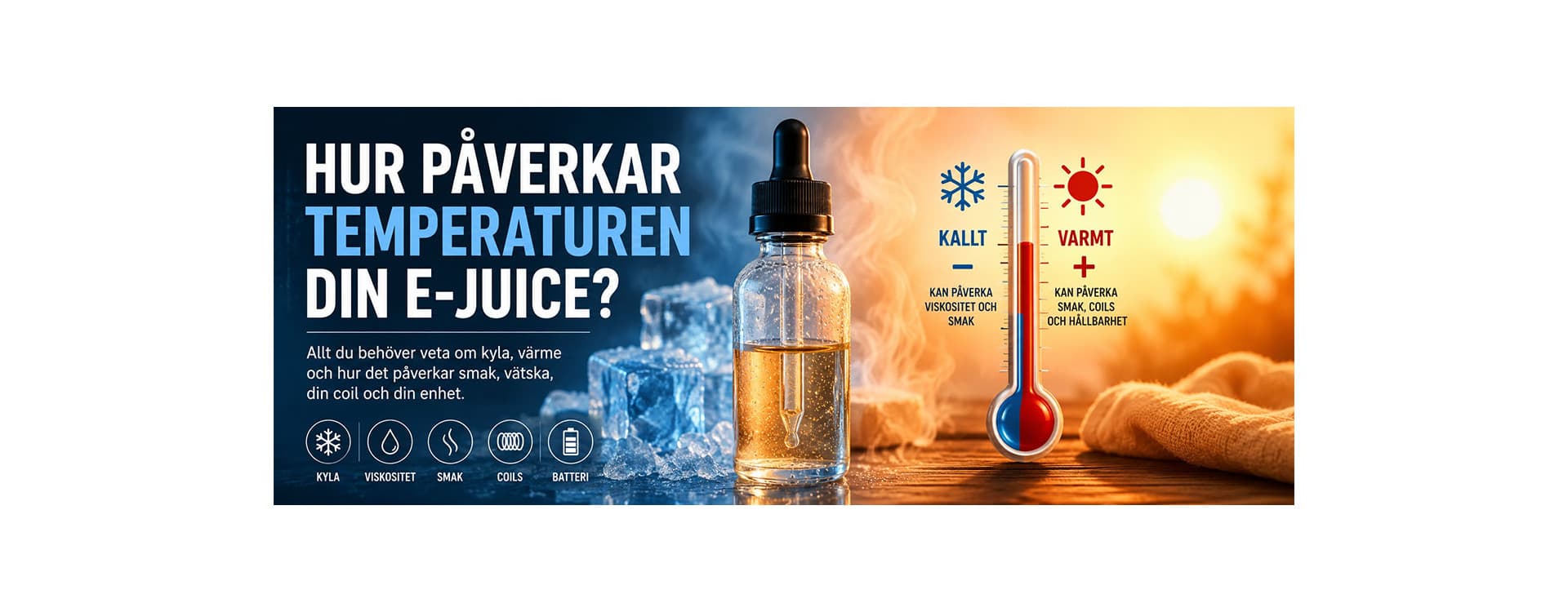
2. Temperature
Temperature clearly affects viscosity. E-liquid becomes:
- Thicker at lower temperatures (for example, during winter or in cold environments).
- Thinner at higher temperatures (for example, during summer or in warm indoor environments).
This means that the same e-liquid may feel different depending on the season and storage location.
3. Flavour Concentrate and Nicotine Type
Flavour concentrates also have their own viscosity. Some flavours are thinner, while others are thicker. This can affect the final product, even if the base has the same VG/PG ratio.
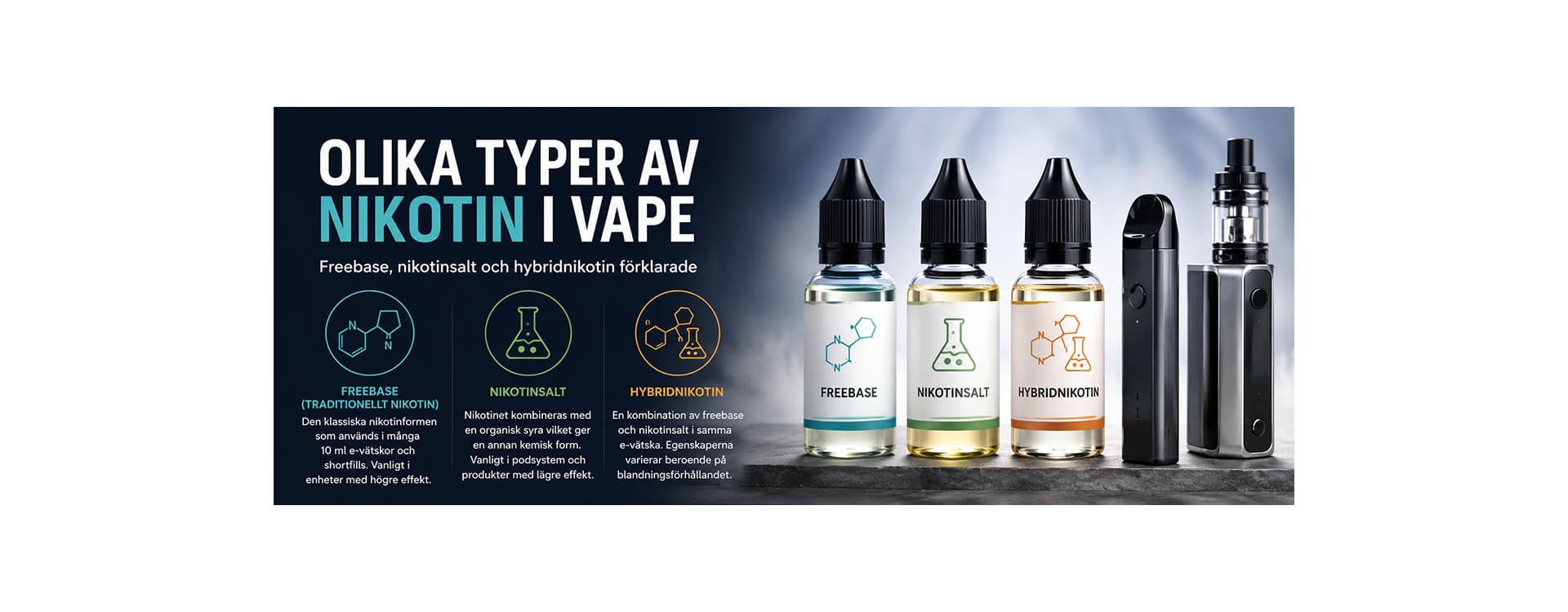
Different nicotine types, such as nicotine salt or classic nicotine base, may have minor differences in how they affect the viscosity of the blend, depending on the manufacturer's recipe.
4. Storage and Homogeneity
E-liquid that has been stored for a long time or exposed to varying temperatures may sometimes need to be shaken to become completely homogeneous again. If the ingredients have partially separated in the bottle, the liquid may feel thicker or thinner in different layers.
Why Viscosity Matters in Practice
Compatibility with Different Coils and Devices
Different coils are designed for different types of e-liquids:
- Thinner liquids (more PG, some 50VG/50PG) often suit smaller coils and pod systems with narrower liquid channels.
- Thicker liquids (high VG) usually require coils with larger liquid channels so that the cotton can become saturated at a reasonable rate.
Using a very thick liquid in a coil intended for thinner liquid can mean that the wick does not absorb the liquid quickly enough. Conversely, a very thin liquid in a coil intended for thicker liquid can increase the risk of leaking.
Liquid Transport and Wick
Viscosity therefore affects how quickly e-liquid moves from the tank, through the wick and into the coil. Matching the liquid's thickness to the device's design can help facilitate even liquid transport and make use more predictable.
The Most Important Points in Brief
The fact that some e-liquids are thicker than others is mainly due to the ratio between PG and VG, with a high VG content producing a more viscous liquid and a high PG content producing a thinner one. Temperature, flavour concentrate, nicotine type and storage also play a role. By understanding how viscosity works, it is possible to gain a better understanding of why different e-liquids behave differently in different types of devices.