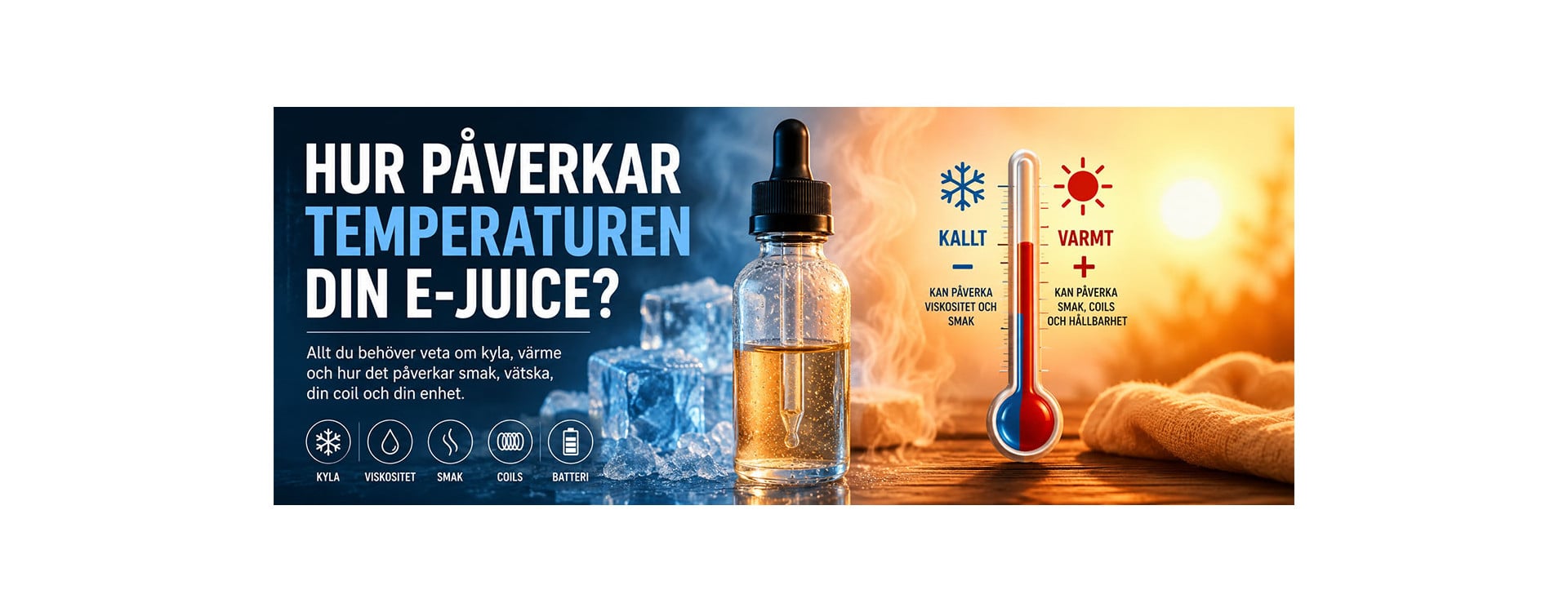
Temperature can affect how your e-juice behaves in a vape. When the e-liquid gets cold, it can become thicker and be transported more slowly to the coil. When it gets warm, it can become thinner and more fluid. This can affect how quickly the cotton absorbs the liquid, how the device feels to use and how consistent the experience is.
For those who use e-juice, nicotine salt, 10 ml e-juice, shortfill or longfill, it is therefore useful to know how heat and cold can affect the properties of e-liquid. This is not about e-juice automatically being ruined by normal room temperature, but about the liquid’s viscosity, flavour experience and function in the device changing depending on the temperature.
Quick answer: what happens to e-juice at different temperatures?
When e-juice gets cold, it usually becomes thicker and more viscous. This can make the liquid move more slowly through the cotton in the coil or pod. When e-juice gets warm, it becomes thinner instead, which can affect how quickly the liquid is transported and how it behaves in the tank or pod.
Temperature therefore primarily affects how the e-liquid moves and is used in the device. This can in turn affect the draw, liquid flow, coil performance, risk of leakage, battery performance and how consistent the experience is.
Why does e-juice react to temperature?
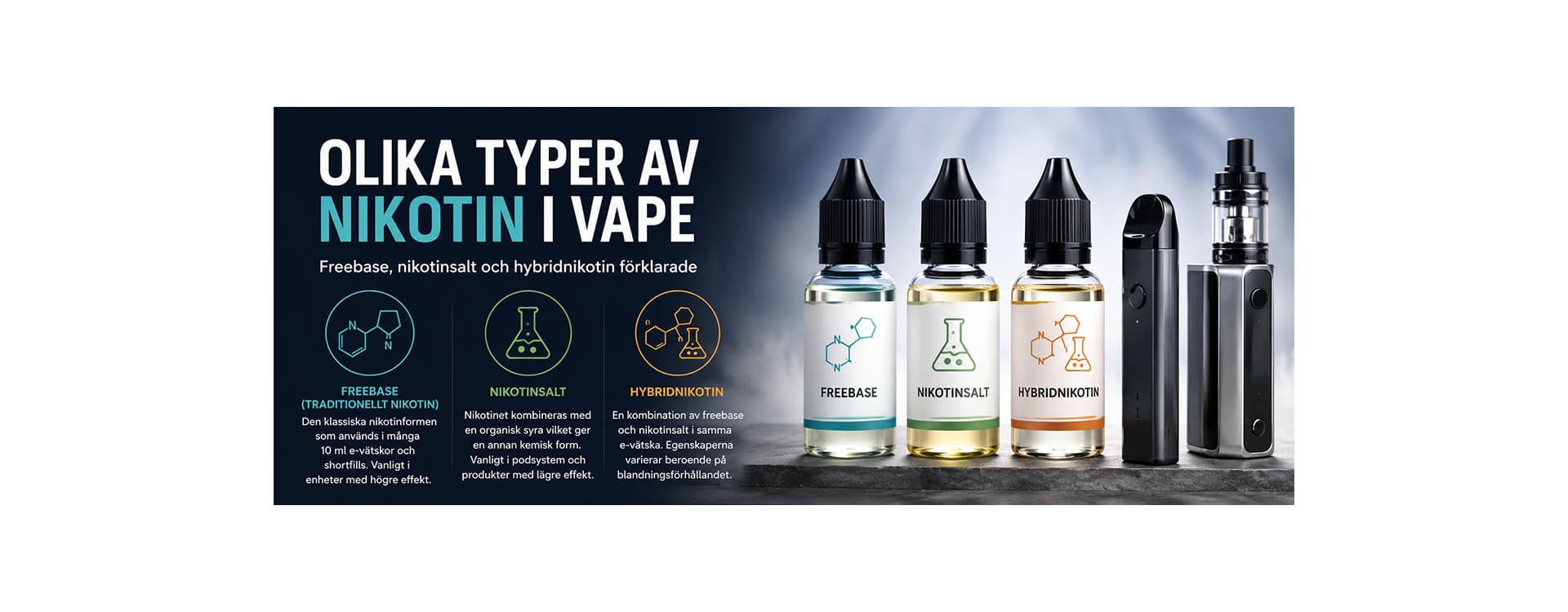
E-juice usually consists of propylene glycol (PG), vegetable glycerine (VG), flavourings and, in some cases, nicotine. These ingredients are affected differently by temperature. VG in particular is more viscous than PG, which means that the e-liquid’s VG/PG ratio plays a major role in how it behaves in cold or warm conditions.
An e-juice with a higher VG content is normally thicker. This can make it even more viscous in a cold environment. An e-juice with a higher PG content is often thinner and can therefore move more quickly through the cotton.
What is viscosity?
Viscosity describes how easily or difficultly a liquid flows. An e-juice with high viscosity is more viscous, while low viscosity means that the liquid flows more easily.
When the temperature falls, viscosity increases, making the e-juice thicker. When the temperature rises, viscosity decreases and the liquid becomes more fluid. This is a natural physical property that affects how quickly the e-liquid is transported through the cotton to the coil.
How significant the change is depends, among other things, on the e-liquid’s VG/PG ratio. E-juices with a higher VG content are often affected more by cold than e-liquids with a higher PG content.
How does cold affect e-juice?
When e-juice is exposed to cold, it often becomes thicker. This is particularly noticeable with e-liquids that have a higher VG content. Cold e-liquid can therefore move more slowly from the tank or pod to the coil.
This can mean that the cotton does not absorb e-liquid as quickly as usual, especially if you use higher power or take several puffs in quick succession. The result can be a drier feeling, weaker liquid flow or an uneven experience.
This does not necessarily mean that the e-juice has been ruined. Often, it is enough to let the bottle, pod or device return to room temperature before use.
Can e-juice freeze?
E-juice can be affected by very low temperatures, but exactly how it behaves depends on its composition. VG, PG, flavourings and nicotine affect the liquid’s freezing point and consistency. In practice, it is more common for e-juice to become very viscous in the cold than to behave like water and freeze solid immediately.
If a bottle has been exposed to severe cold, let it stand at room temperature and shake it gently before use. Do not use e-juice if the bottle, cap or liquid appears damaged or unusual, or if the contents do not look normal after returning to room temperature.
How does heat affect e-juice?
When e-juice gets warm, it normally becomes thinner and more fluid. This can make the liquid move more quickly in the tank or pod. In some cases, this can make the device feel different, especially if it is already designed for thinner e-liquid.
However, excessive heat is not good for e-juice. High temperatures can affect flavourings and cause the liquid to change more quickly over time. It is therefore not recommended to leave e-juice in direct sunlight, in a hot car or near other heat sources.
Can high temperatures increase the risk of leakage?
Yes, it can in some cases. When e-juice gets warmer, it also becomes more fluid. This can make the liquid move more easily through the liquid channels of the pod or tank and, in some situations, increase the risk of condensation or leakage.
If a vape has been left in a hot car or in direct sunlight for a long time, it may therefore be a good idea to check the pod or tank before use. If you experience recurring leakage, it could also be caused by other factors, such as worn seals, the wrong coil, the wrong type of e-juice or overfilling the pod/tank.
Can heat affect the flavour?
Yes, heat can affect how the flavourings in e-juice are experienced. If the e-liquid is exposed to high temperatures for an extended period, the flavour profile can change. This does not mean that every short-term temperature change ruins the e-juice, but prolonged heat should be avoided.
It is also important to distinguish between the temperature in the bottle and the temperature in the coil itself. E-juice is designed to be vaporised in a vape, but the bottle should still be stored in stable conditions and not exposed to unnecessary heat before use.
If you want to learn more about how different devices affect the flavour experience, you can read our guide Why does the same e-juice taste different in different vapes?.
Does temperature affect nicotine?
Nicotine can be affected by light, oxygen and heat over time. It is therefore wise to store nicotine-containing e-juice in a cool, dark place with the cap properly closed. This applies to both traditional e-liquid and nicotine salt.
This does not mean that a bottle becomes unusable immediately if it happens to get warm for a short time. However, to preserve the product’s properties, you should avoid prolonged exposure to high heat, direct sunlight and leaving the bottle open unnecessarily.
Does e-juice become thicker in winter?
Yes, e-juice can feel thicker during cold periods. This is especially noticeable if the bottle, pod or tank has been left somewhere cold. Thicker e-liquid moves more slowly through the cotton and can therefore affect how the device works.
If your vape feels different in winter, temperature may therefore be one of the causes. It could also be due to the coil, battery level, power setting or the type of e-liquid you are using.
Can cold e-juice affect the coil?
Cold and viscous e-juice can cause the cotton in the coil to saturate more slowly. If the coil does not receive enough liquid, it can operate drier than normal, especially at higher power. This can in turn affect the coil’s lifespan and how consistent the experience is.
If you experience a burnt taste, poorer liquid flow or a coil that deteriorates quickly, you can read our guide Why does my coil turn black?. If you are unsure which coil fits your device, you can also read How do you know which coil to use?.
Does temperature affect the battery in your vape?
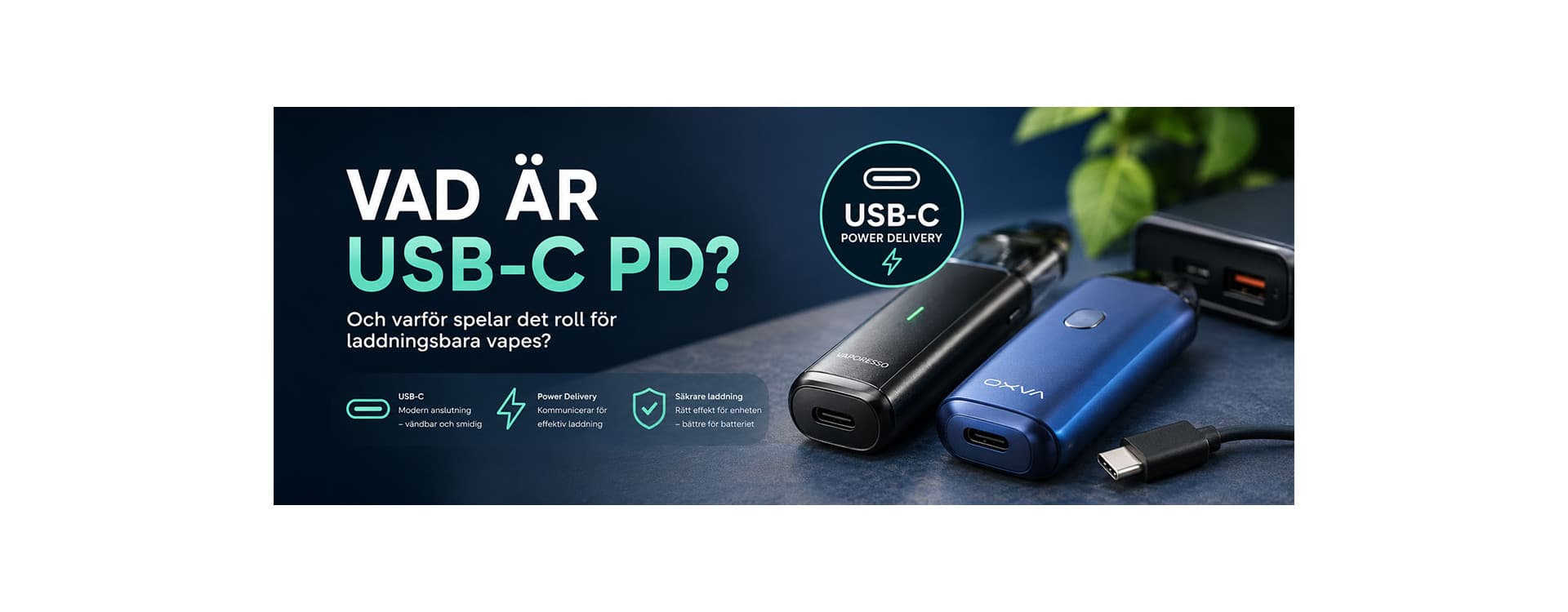
Temperature affects more than just the e-juice. Batteries can also be affected by cold and heat. A vape that is very cold may feel weaker or respond differently, while high heat can be negative for the battery’s lifespan and safety.
If you want to read more about batteries, you can continue to our guide What is the difference between an integrated battery and a replaceable battery in a vape?.
How does temperature affect your entire vape?
Temperature affects more than just the e-juice. The entire vape system can be affected when the device is used in very cold or hot environments.
- E-juice: becomes thicker in the cold and thinner in the heat.
- The coil: may have slower liquid flow if the e-juice is cold.
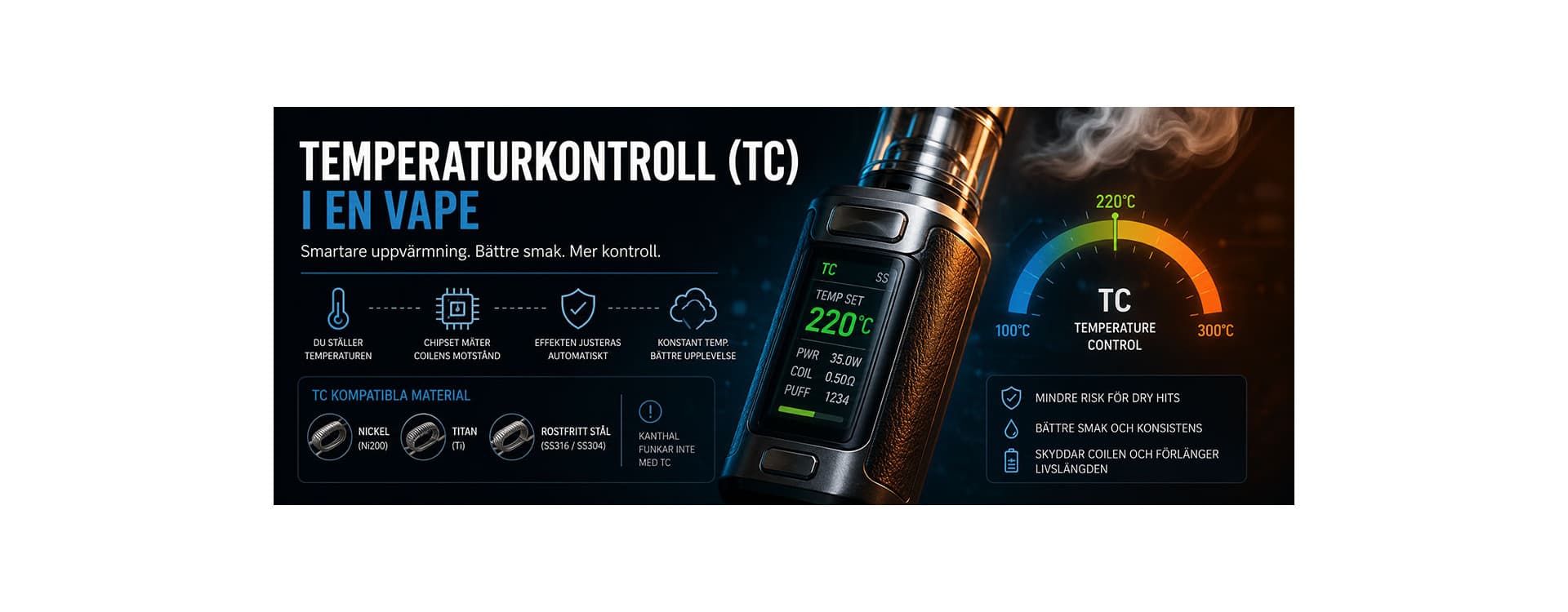
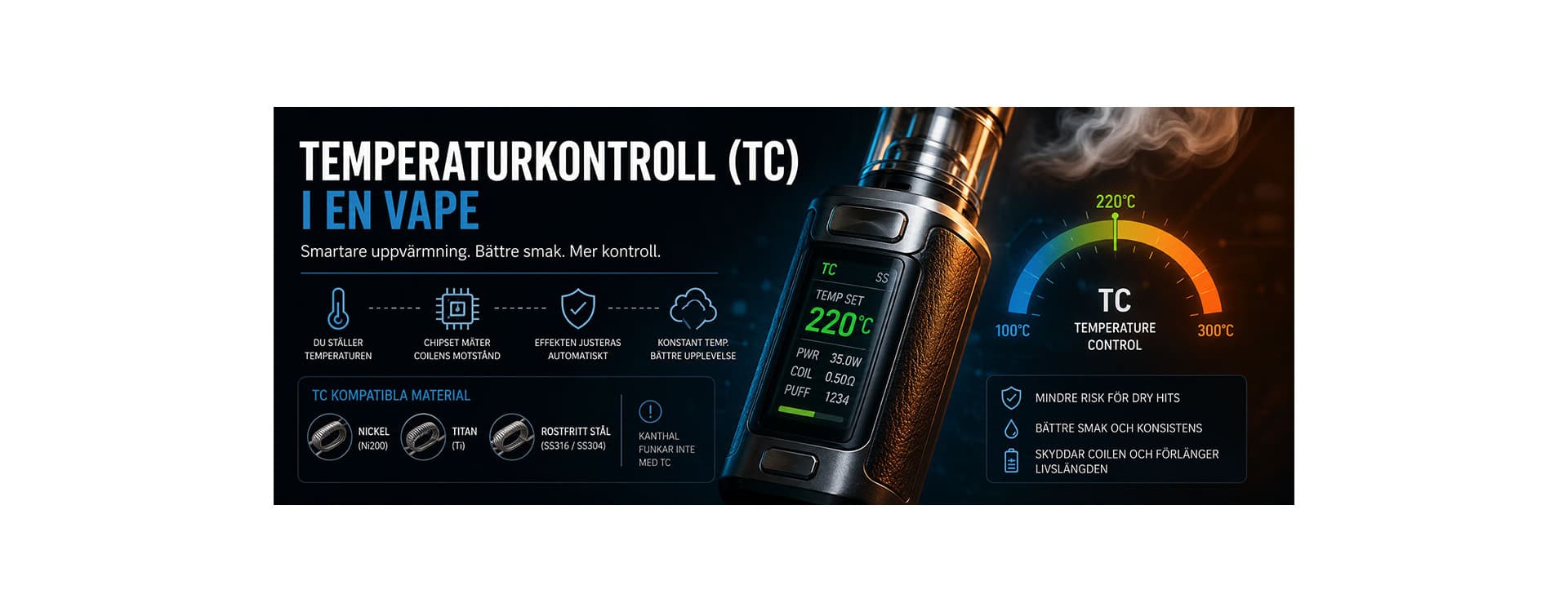
- The battery: very low or high temperatures can affect battery performance.
- Airflow: condensation can sometimes occur with significant temperature differences.
- Risk of leakage: high heat can make e-juice more fluid.
If you use your vape outdoors all year round, it may therefore be a good idea to let both the device and the e-liquid adjust to room temperature before extended use.
Are different types of e-juice affected differently?
Yes. Different types of e-juice can be affected to varying degrees depending on the VG/PG ratio, type of nicotine and intended use.
- Nicotine salt: is often used in pod systems and MTL devices. Check that the liquid is suitable for the device and pod.
- 10 ml e-juice: is often available in different nicotine strengths and VG/PG ratios.
- Shortfill: often has a higher VG content and can therefore become more viscous in the cold.
- Longfill: is mixed before use and should be handled according to the product’s instructions.
If you use shortfill with a high VG content, the effect of temperature on viscosity may be more noticeable than with thinner e-liquids.
Which type of e-juice is best suited to different temperatures?
Temperature is only one of several factors when choosing e-juice, but it can affect how different liquids work in practice.
- Shortfills often have a higher VG content and can therefore become more viscous during cold periods. If you use a sub-ohm vape, you can compare our range of shortfills.
- Nicotine salt is usually used in pod systems with lower power and thinner e-liquids. You can find several options in the nicotine salt category.
- 10 ml e-juice is available in several different VG/PG ratios and nicotine strengths, making it easier to choose an e-liquid that suits both the device and the intended use. See our range of 10 ml e-juice.
- Longfills are mixed before use and can be customised with base liquid. See our range of longfill if you want to compare different formats.
When choosing e-juice, it is therefore a good idea to consider the device, coil, power range and the environment in which you most often use your vape.
Should you store e-juice in the refrigerator?
For most users, refrigeration is not necessary. E-juice should generally be stored in a cool, dark and dry place, but not necessarily somewhere cold. Temperatures that are too low can make the liquid viscous, meaning it may need to return to room temperature before use.
The most important thing is to avoid direct sunlight, high heat and leaving the bottle open. Always keep e-juice out of reach of children and animals.
Can you leave e-juice in the car?
It is not recommended to leave e-juice in the car for an extended period. In summer, the temperature inside a car can become very high, which can affect flavourings, nicotine and the properties of the liquid. In winter, the liquid can instead become very cold and viscous.
If you have had e-juice in the car, let it return to room temperature and check that the liquid looks normal before use.
How does temperature affect your vaping experience?
Temperature can affect several parts of the experience:
- Liquid flow: cold e-juice can move more slowly.
- Coil performance: the cotton may saturate more slowly if the liquid is viscous.
- Flavour experience: prolonged heat can affect flavourings.
- Battery: cold and heat can affect battery performance.
- Draw: the device may feel different depending on the liquid’s temperature and consistency.
- Condensation and leakage: significant temperature differences or high heat can affect how the liquid moves in the pod or tank.
If you want to compare different types of products and how their specifications affect use, you can start in the vape starter kits category.
What should you consider when buying e-juice?
If you know that your e-juice is often exposed to cold or heat, it may be a good idea to compare the VG/PG ratio, type of device and which coil the product is intended to be used with. A thicker e-liquid may work better in some tanks and worse in other pod systems.
For those who use pod systems, nicotine salt may be relevant to compare. For those who use larger tanks or more open devices, shortfill may be an option depending on the device and coil.
You can also view our range from brands such as Liqua, Drifter and Vaporesso if you want to compare products, e-liquids and compatible devices.
Common misconceptions about temperature and e-juice
- Cold e-juice is not automatically ruined. It may simply have become more viscous.
- Warm e-juice should not be stored at high temperatures for a long time. High heat can affect the product’s properties.
- VG/PG matters. A higher VG content often means a thicker liquid.
- Temperature affects more than just the bottle. The coil, battery and liquid flow can also be affected.
- Not all e-juices react in exactly the same way. Composition and intended use matter.
- Refrigeration is not always necessary. For many users, cool, dark and dry storage is sufficient.
FAQ about temperature and e-juice
Does e-juice become thicker when it is cold?
Yes. E-juice can become more viscous in the cold, especially if it has a higher VG content. Let the liquid return to room temperature before use.
Can e-juice be left in a hot car?
It is not recommended. High heat over an extended period can affect flavourings, nicotine and the properties of the liquid.
Can you use cold e-juice immediately?
It is better to let the e-juice reach room temperature first. Cold and viscous liquid can be transported more slowly to the coil.
Does temperature affect the flavour?
Yes, especially if the e-juice is exposed to high heat for an extended period. The flavourings can change and the flavour experience may be different.
Does temperature affect the nicotine strength?
Temperature can affect nicotine over time, especially together with light and oxygen. Therefore, store nicotine-containing e-juice in a cool, dark place with the cap properly closed.
Can warm e-juice make my vape leak?
It can happen in some cases because warm e-juice becomes more fluid. However, leakage can also be caused by the pod, tank, coil, seals or how the product is filled and used.
Is it dangerous if e-juice has become cold?
Cold often makes e-juice thicker, but this does not automatically mean that it has been ruined. Let it return to room temperature and check that the liquid looks normal before use.