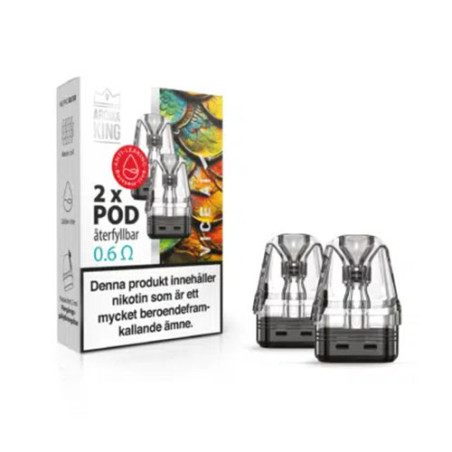
Stop using the tank if it is leaking and wipe up the spill. Check the fill level, coil installation and tank seals. If liquid has entered the electronics, the device must not be used or charged.
Why does a tank leak?
Common causes include overfilling, an incorrectly installed or worn coil and damaged O-rings. The liquid may also be too thin for the design. Heat and pressure changes can contribute to leaks.
- Filling the central airflow channel or above the maximum level can cause liquid to escape through the airflow.
- A coil that is incorrectly fitted, worn or incompatible with the tank may allow liquid through. Too low a wattage can result in incomplete vaporisation.
- Missing, pinched or cracked seals can make the connections leaky.
- Hard draws can bring in more liquid than the coil has time to vaporise.
How do you check the filling and seals?
Fill through the designated filling port without exceeding the maximum level. Keep the liquid away from the airflow channel and close the lid properly. Position the bottle tip according to the design of the filling opening.
On the SMOK TFV8 Baby, open the swivel top and fill the liquid through the opening beside the central airflow tube.

Leave the tank's designated air space. On the Innokin GoMax, the manufacturer states that the airflow is closed during filling and opened afterwards.
Check that the O-rings are correctly positioned and intact. Replace damaged seals with suitable parts. Screw threaded parts together straight and by hand. If a thread catches, loosen it and realign the part instead of forcing it. The coil should be fully seated.
Residue around the base and gaps can be removed from disassembled, washable parts. Read about cleaning the liquid reservoir.
How do the e-liquid and coil affect this?
PG is thinner than VG. 50PG/50VG contains equal parts; 60VG/40PG is thicker and 70VG/30PG has an even higher VG proportion. Liquid that is too thin can overfeed a coil, while liquid that is too thick may be absorbed too slowly. Liquid openings, wick and construction determine how the feeding works.
Innokin describes 70VG/30PG for the 0.16-ohm Ajax coil with large liquid openings. Joyetech's 0.6-ohm BF SS316 in the eGo AIO, on the other hand, is a sub-ohm coil for mouth-to-lung vaping. Sub-ohm simply means resistance below 1 ohm; the coil's intended liquid and wattage need to be stated separately. Coils above 1 ohm are also often used for mouth-to-lung vaping with tighter airflow.
Keep the wattage within the coil's recommended range. Higher wattage is not a general solution to leakage. Replace a worn coil; burnt cotton cannot be restored by filling or washing. With a fixed coil, replace the entire pod. Frequent activations can leave the cotton dry, while hard draws can bring in too much liquid. More advice is available under tips for avoiding burnt coils.
What do you do if a disposable vape leaks?
Stop using a leaking disposable device. Do not open it to empty or repair it, and do not try to troubleshoot it by taking more puffs. Leakage can occur due to a manufacturing defect, overfilling or when liquid enters the airflow channel, even before use or after transport.
Some disposable vapes have absorbent material around the coil. The construction varies between models.
Can heat and travel cause leakage?
Yes. Air pressure can change during a flight or when travelling up a high mountain. High heat and direct sunlight can also affect the liquid and tank. Store the device away from intense heat and allow a warm tank to cool before filling. E-cigarettes must not be used or charged on board aircraft.
Quick Facts
- Reading Time
- 3 min
- Popularity
- Very Popular
- Category
- Troubleshooting & maintenance
- Published
- 2023-04-05
Related Products
Products mentioned in this article