Understanding your display: What do all the symbols on your vape mean?
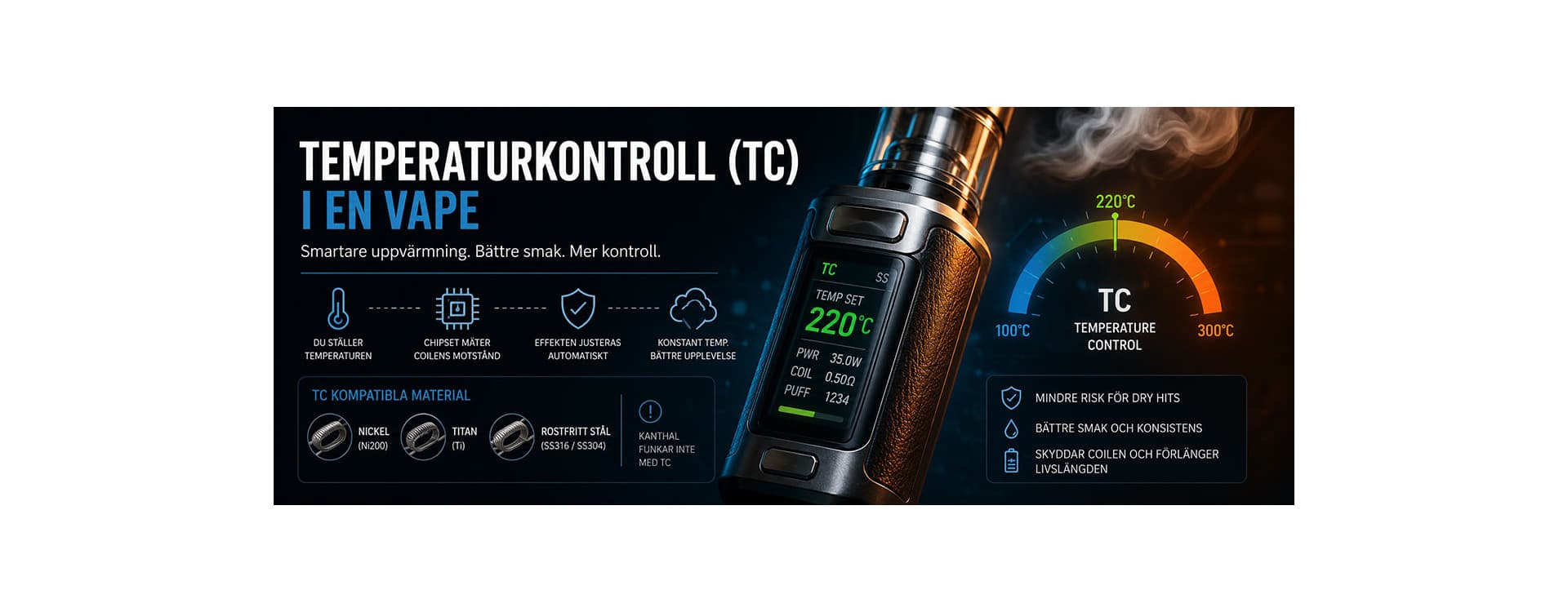
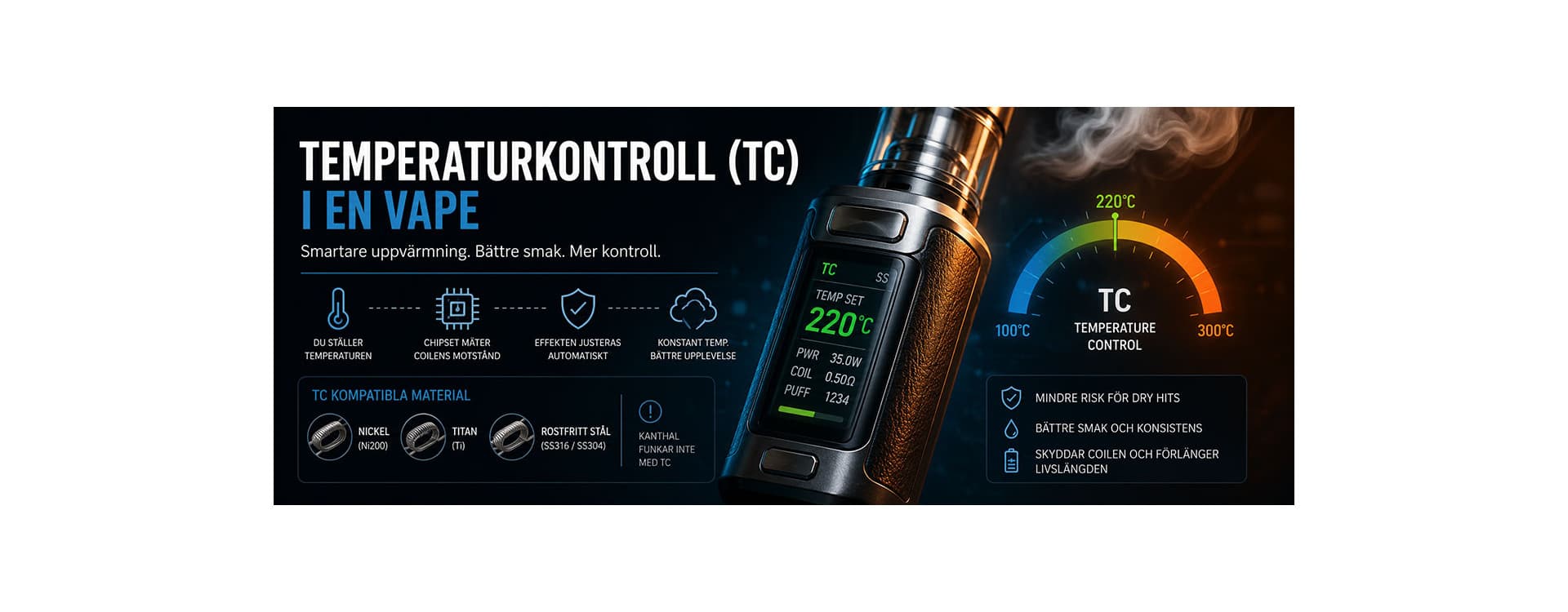
The display on a vape can show battery level, power, coil resistance and error messages. The meaning of a symbol depends on the model and operating mode: a lock, for example, may apply to the power setting without preventing activation. The screen provides information about the device, but is not a safety certificate.
Why do some vapes have a display?
The display shows status and settings that the device is designed to report. It can also show that a protective function has limited or stopped the output.
- Battery level and charging status.
- Power in watts and coil resistance in ohms.
- Voltage and, on some models, current.
- Puff counter, lock status and error messages.
Not all models have the same views or measurements. A simple pod, for example, may lack a full display.
The battery symbol
The battery icon or percentage value shows the device’s estimate of the remaining charge. It is not a measurement of the battery’s permitted current or an indication that the battery is undamaged. The voltage may drop under load even when charge remains.

A low-battery warning means that the model has reached a specified battery condition. The warning threshold and how the device responds vary between models; the device should not be activated repeatedly to bypass the cutoff.
Watts and power
W stands for watts, the unit of electrical power. On the Evolv DNA 60, the standard screen shows the set power. That value is not always the power that can actually be delivered: when the battery is limiting output, the delivered power may be lower.
Some models allow the user to set the power, while others regulate it automatically. The power range must suit the specific coil and device. The same ohm rating does not mean that two coils for e-cigarettes have the same fit or wattage range.
The ohm symbol (Ω)
Ω means ohm and indicates electrical resistance. A display may, for example, show 0.6 Ω, 0.8 Ω or 1.2 Ω for a connected coil. The value does not indicate which coil series, e-liquid or power setting is suitable.
Ohm’s law describes the relationship U = R × I between voltage, resistance and current at the same electrical point. In a regulated device, the electronics convert the battery’s voltage to the coil’s output, so coil current and battery current must be distinguished. A resistance lock locks a reference for regulation and should not be confused with an activation lock.
Voltage and current
V stands for volts and indicates voltage. A stands for amperes and indicates current. On the DNA 60, the standard view shows the voltage to the coil; other views may show battery voltage or output current. These are different values, even though the same device may display them.
On the Innokin Sensis-EZ, output voltage is distinguished from battery voltage in the secondary view. A V value should therefore not automatically be read as the battery’s voltage. Charging specifications, coil output and battery load are separate pieces of information.
Puff counter
The puff counter records activations according to the model’s functionality. The counter may refer to usage since a reset, but the number of activations does not indicate how long each activation lasted or how much aerosol or nicotine was delivered.
On the SMOK NOVO CLASSY, there is both Puff Reset for resetting and Puff Remind with an adjustable limit of 15–200 puffs. When that limit is reached, the model uses a lock mode. A simple counter display and a function with a limit are different things. On that model, the puff limit can therefore lock usage.
Lock icon and safety functions
A lock may apply to activation, power settings or a resistance value. On the DNA 60, these are separate functions. A locked wattage value therefore does not automatically mean that the fire button is disabled.
Button combinations and automatic locks are model-specific. Before transport, the device’s shutdown function or designated activation lock should be used; a settings lock symbol does not replace this. Protective functions or a locked screen do not make a damaged device suitable for use.
Charging symbols
A lightning bolt, a battery icon that fills up or a percentage value may show charging status. The symbol does not prove that the cable and power source are compatible or that the device may be used while charging.
Charging support and use with a connected cable are separate functions. The latter is often called passthrough and has its own model conditions. Charge with the intended equipment while you are awake and supervising the process. Disconnect the charger when the battery is fully charged.
Common error messages on the display
The error message describes a condition that the device has detected. It does not always identify which physical part is causing the error. The common terms below may have different wording and conditions on different models.
| Term | Meaning and model difference |
|---|---|
| No Atomizer | On the Eleaf iStick Pico 25, No Atomizer means that the device does not detect a connected atomizer. This is not the same message as a short circuit. |
| Check Atomizer | On the Aspire Flexus Pro, Check Atomizer is used for an open circuit. It is a connection condition, not a definitive diagnosis of a worn-out coil. |
| Short Circuit | The term refers to a short circuit. The Pico 25 instead displays Atomizer Short. The message should not be equated with every low ohm value; use should be discontinued. |
| Low Battery | The Pico 25 uses Battery Low for its low-voltage protection. A separate Weak Battery message may limit output under load. They are not the same message or condition. |
| Over Time | The Pico 25 displays Over 10s and stops output after an activation that is too long. Ten seconds is that model’s condition, not a universal limit for all devices. |
| Device Locked | The term needs to be distinguished from a settings lock. The Pico 25’s Key Lock applies to the setting buttons; the DNA 60 has a separate activation lock. A similar lock message therefore does not necessarily disable the same function. |
In the event of a short circuit or persistent connection error, the device should not be repeatedly activated to test it. Disconnect the charging cable, turn off the device and allow it to cool before handling intended removable parts. In the event of damage, abnormal heat, swelling or suspected liquid in the electronics, discontinue both use and charging. Do not open the battery compartment in an attempt to repair the fault.
Why do the symbols differ between manufacturers?
Manufacturers use different menus, operating modes and terms. The same device symbol, such as V, may also refer to different measurement points. W and Ω indicate the same physical units, but a model message such as Battery Low has conditions specific to that model.
The model name, operating mode and exact text on the screen therefore need to be considered together when interpreting status. The examples named above show why an icon or error term alone does not provide a universal indication.
What should you keep in mind?
Distinguish set values from measured values and intended lock functions from protective cutoffs. Do not use the screen as a test that declares a damaged device safe.
- Use the device’s compatible coil series and accessories; the ohm rating alone does not indicate fit.
- Do not ignore or bypass error messages. A warning that temporarily disappears does not prove that the cause has been resolved.
- The Eleaf iStick Pico 25 supports firmware upgrades. Firmware updates apply only to models with a supported update function and intended software. They do not replace the handling of physical damage, a short circuit or liquid in the electronics.
- The battery display describes charging status, not current capacity or undamaged condition. Charging and battery selection must follow the device’s design.
The most important things to remember
The display may show battery, power, resistance, voltage, current, charging and locking. Values and messages need to be interpreted for the specified model. A settings lock is not always an activation lock, and a battery icon is not a safety certificate.
The following nicotine warning applies to e-liquid containing nicotine:
Contains nicotine, which is a highly addictive substance. Age limit 18 years.