

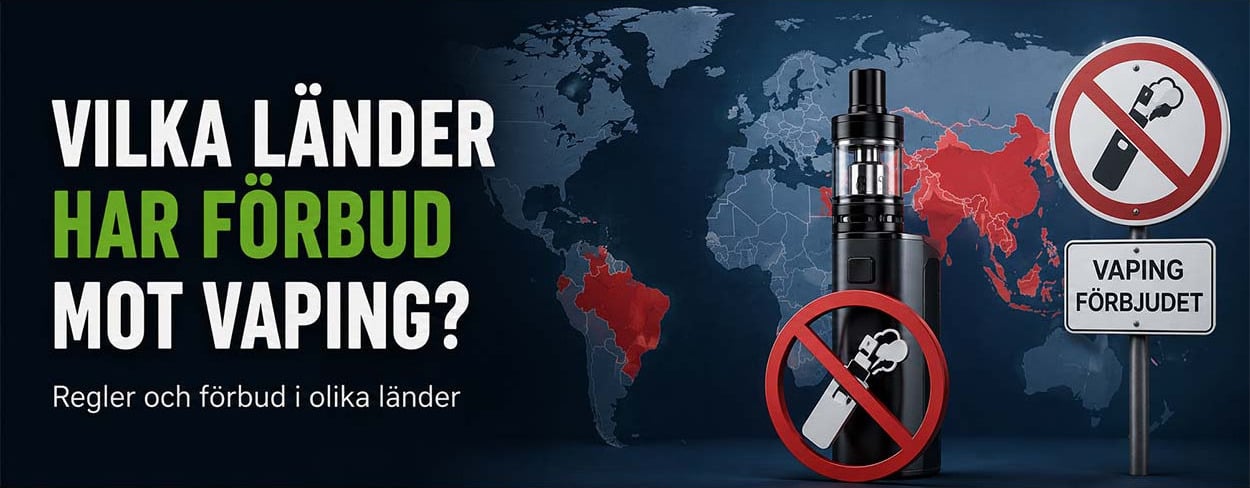
Singapore and Cambodia ban both possession and use of e-cigarettes. Thailand bans import and sale, and official travel advice also states that possession and use are prohibited. In other countries, the ban applies to certain activities or product types: Brazil, for example, bans import and sale, while the United Kingdom has banned the sale of disposable vapes.
Rules as of 9 October 2026. For vapes, the rules on bringing them into the country, sale, possession and use differ. A sales ban therefore does not automatically mean that private use is prohibited.
What can a vape ban cover?
An import ban stops goods from being brought across the country's border. A sales ban applies to trade in the products. Possession means having an e-cigarette, while use means using it. Production, distribution, transport and advertising may also be prohibited. The rules in several countries also cover nicotine-free e-cigarettes.
Which countries ban or restrict e-cigarettes?
Singapore, Thailand and Cambodia have bans that cover use. In Brazil and Mexico, trade and import are prohibited, but the rules distinguish between this and private possession. The table shows what the bans cover.
| Country | What applies to e-cigarettes? |
|---|---|
| Singapore | Import, sale, distribution for sale, purchase, possession and use are prohibited. The rules also apply to visitors. The Tobacco and Vaporisers Control Act has been in force since 1 May 2026 and covers the purchase and trade of vape products. Violations may lead to legal penalties. |
| Thailand | Import and sale are prohibited. The Thai embassy warns travellers against bringing them into the country, and the UK Foreign Office's travel advice also states that possession and use are prohibited. Personal use does not provide an exception to the import ban. |
| India | The 2019 law prohibits the production, import, export, transport, sale, distribution, advertising and storage of e-cigarettes. The rules cover products both with and without nicotine. |
| Brazil | Manufacture, import and sale are prohibited, including bringing them in personal luggage. Private possession and use are not generally prohibited, but use is prohibited in enclosed communal environments. |
| Mexico | Production, import, sale, distribution and marketing are prohibited. The law exempts personal possession and consumption from the trade ban. The exemption does not give the right to bring a vape into the country. Vaping in public spaces may result in fines. |
| Qatar | Import, sale and purchase are prohibited. The import ban also applies to small quantities for personal use, both in luggage and by post. |
| Brunei | Import and sale are prohibited. Possession without a valid permit may also result in penalties. |
| Turkmenistan | Retail sale of e-cigarettes is prohibited. |
| Oman | Import and use are illegal according to the country's official visitor information. The sale of e-cigarettes, electronic hookahs and accessories is prohibited. |
| Cambodia | Import, sale, possession and use of electronic smoking products are prohibited. |
Which countries have regulated markets or bans on certain products?
Sweden and Germany regulate, among other things, age limits and product requirements. The United Kingdom, France and New Zealand have also banned the sale of certain disposable products. Argentina introduced new regulations in May 2026. In Panama, the previous general ban has been invalidated.
- Sweden: An age limit of 18 applies to the sale of e-cigarettes and nicotine-containing refill containers. E-liquid may contain a maximum of 20 mg/ml. E-cigarettes are covered by the ban on smoke-free places, even when used without nicotine.
- United Kingdom: The sale and supply of disposable vapes have been prohibited since 1 June 2025, including those without nicotine. The ban applies both to shops and online sales. The fact that the battery can be recharged does not in itself make a disposable vape an allowed reusable product.
- France: Since 26 February 2025, the sale and supply of pre-filled e-cigarettes that cannot be refilled have been prohibited. This also applies if the battery can be recharged. Sales to people under 18 are prohibited.
- Germany: An age limit of 18 applies when e-cigarettes are supplied, including nicotine-free ones. E-liquid may contain a maximum of 20 mg/ml. Use is prohibited in, among other places, federal institutions and public transport; additional rules apply at state level.
- New Zealand: The manufacture, sale, distribution and supply of disposable vapes have been prohibited since 17 June 2025. The sale of vape products is subject to an age limit of 18. General retailers may only sell tobacco, mint and menthol flavours; different rules apply to approved specialist retailers.
- Argentina: The previous general ban was replaced in May 2026 by regulations with product requirements and registration for trade and import. Pre-filled disposable vapes are still prohibited from being sold and imported. The new regulations allow only tobacco flavour in e-liquids. The registration system has transitional rules, so the change does not mean that all other products may be freely sold or brought into the country. E-cigarettes may not be used where smoking is prohibited.
- Panama: The previous general ban was invalidated by the country's Supreme Court. Current rules prohibit sales to minors, use by minors, and advertising and sponsorship. Use is also prohibited, among other places, in offices, on public transport, at terminals and in enclosed public spaces.
Why do countries introduce vape bans?
Authorities cite, among other things, public health, youth use and waste from disposable products. The UK government justified its disposable vape ban by referring both to young people's access to the products and environmental problems. New Zealand's stricter rules are intended, among other things, to limit young people's access and marketing that could encourage young people to start using vapes. Panama refers to the precautionary principle in public health.
Flavours are also regulated: New Zealand limits the flavours that general retailers may sell. Countries can therefore restrict parts of the market without banning all e-cigarettes.
What restrictions apply where e-cigarettes are sold?
Rules may cover age, nicotine content, packaging, advertising, sales channels and places of use. In Sweden, the following apply, among other things:
- Age: E-cigarettes and nicotine-containing refill containers may not be sold or supplied in the course of business to people under 18.
- Nicotine: E-liquid may contain a maximum of 20 mg/ml. A nicotine-containing refill container may hold a maximum of 10 ml. In disposable e-cigarettes and disposable cartridges containing e-liquid, the tank or cartridge may hold a maximum of 2 ml.
- Packaging: The products must meet requirements including child-resistant and tamper-resistant packaging. Required labelling and information leaflets must be in Swedish.
- Marketing: Commercial advertising for e-cigarettes and nicotine-containing refill containers is prohibited, among other places, on the internet, in social media and by email. A website where the products are sold may display neutral product and price information needed for the sale. This does not give the right to general advertising on the website.
- Sales channels: Age verification applies both in shops and online. Sellers must have self-monitoring procedures; cross-border distance sales are subject to registration requirements.
- Public places: E-cigarettes may not be used in places covered by the law's smoking ban, such as outdoor dining areas, platforms, playgrounds accessible to the public and entrances to premises accessible to the public.
Can you take a vape when travelling?
Not to a country where bringing it in is prohibited. This applies, for example, to Singapore, Thailand, Brazil, Qatar and Oman. The fact that the product is for personal use or is in hand luggage does not override the country's import ban.
On flights that allow e-cigarettes, they must be carried in hand luggage, not checked baggage. They may not be used or charged during the flight. Some airlines ban them completely.
Airline baggage rules and the laws of the country are two different matters. An e-cigarette that may be carried in hand luggage may not automatically be brought into the destination country. Our guide on taking a vape abroad describes air travel, baggage and transport.
Do the same rules apply to nicotine-free vapes?
Many bans also apply to nicotine-free e-cigarettes. India's ban covers e-cigarettes without nicotine, and the UK's disposable vape ban applies regardless of nicotine content. Sweden's rules on smoke-free places also cover nicotine-free e-cigarettes. For transport questions, see our guide on taking an e-cigarette abroad.
Quick Facts
- Reading Time
- 7 min
- Popularity
- Very Popular
- Category
- Rules & travel
- Published
- 2026-06-02